Introduction to Coconut Shell Charcoal Industry
Global demand for eco-friendly raw materials continues to grow each year. Many industries now seek sustainable and efficient energy sources. Coconut shell charcoal has become one of the most promising solutions. Choosing a reliable industrial coconut shell charcoal supplier helps companies maintain consistent quality and operational stability.
What Is Coconut Shell Charcoal?
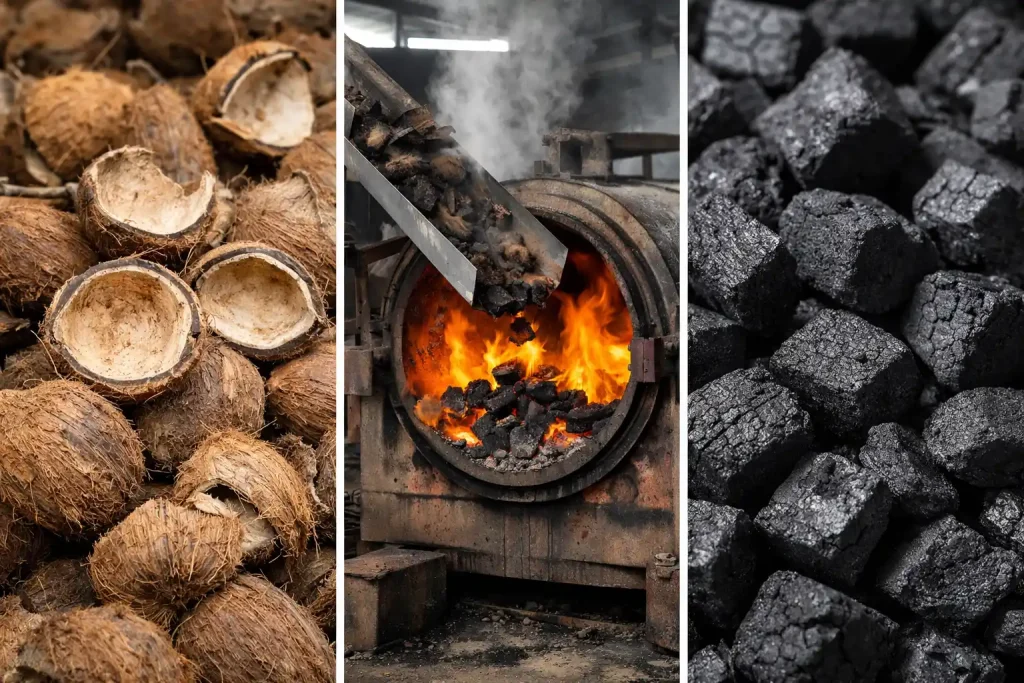
Coconut shell charcoal is produced through a controlled carbonization process. Manufacturers heat coconut shells at high temperatures without oxygen. This process creates dense charcoal with strong burning performance. Unlike wood charcoal, it comes from agricultural waste. This makes it a sustainable and renewable material.
Southeast Asian countries play an important role in global supply. Their large coconut production supports continuous raw material availability.
Key Advantages for Industrial Applications
Coconut shell charcoal has high carbon content and excellent density. These qualities allow longer burning time and stable heat output. It also produces less ash compared to traditional charcoal.
Many industries rely on this material for manufacturing processes. Common sectors include activated carbon production, metallurgy, food processing, and energy generation. Processed products such as Shisha charcoal cubes are also popular because they burn cleanly and consistently.
Importance of Quality Consistency
Consistency is essential in industrial applications. Companies require uniform size, controlled moisture levels, and low impurity content. Reliable suppliers apply strict quality control during production.
Each stage, from raw material selection to packaging, must follow clear standards. This approach reduces production risks and improves efficiency.
Sustainability and Environmental Benefits
Sustainability has become a major business priority worldwide. Coconut shell charcoal supports circular economy principles. It uses coconut waste that might otherwise be discarded.
Responsible suppliers often collaborate with local farmers and communities. This cooperation creates economic opportunities while reducing environmental impact.
Logistics and Global Supply Capability
Strong logistics management is another important factor. Industrial buyers usually require large shipments delivered on schedule. Experienced suppliers understand export regulations and documentation requirements.
Proper packaging also protects charcoal during international transportation. Efficient logistics help prevent delays and unexpected costs.
Customization for Industry Needs
Different industries require different specifications. Some buyers need specific sizes or carbonization levels. Others request customized packaging formats.
A professional supplier can adjust production to match these requirements. Custom solutions help improve compatibility with industrial equipment.
Cost Efficiency and Long-Term Partnership
Working with established suppliers can improve cost efficiency. Stable production systems help maintain competitive pricing. Long-term cooperation also improves supply planning.
Companies seeking dependable sourcing solutions can explore trusted exporters such as indobriquettescharcoal.com, known for consistent quality and international standards.
Future Outlook of Coconut Shell Charcoal Industry
The future of coconut shell charcoal looks promising. Industries continue moving toward sustainable materials. Renewable energy sources are becoming more important worldwide.
Coconut shell charcoal offers efficiency, sustainability, and versatility. These advantages make it valuable for modern manufacturing.
Conclusion
Selecting the right industrial coconut shell charcoal supplier is a strategic decision. The right partner ensures quality, stability, and sustainability. Businesses that choose reliable suppliers gain long-term competitive advantages. At the same time, they contribute to a more sustainable global industry.