In recent years, global demand for eco-friendly fuel alternatives has increased significantly. Businesses and consumers alike are shifting toward renewable resources that offer both performance and environmental responsibility. One product leading this transition is coconut charcoal, known for its efficiency, sustainability, and versatility. As demand continues to grow, finding a reliable high volume coconut charcoal supplier has become essential for distributors, manufacturers, and international buyers.
Why Coconut Charcoal Is in High Demand
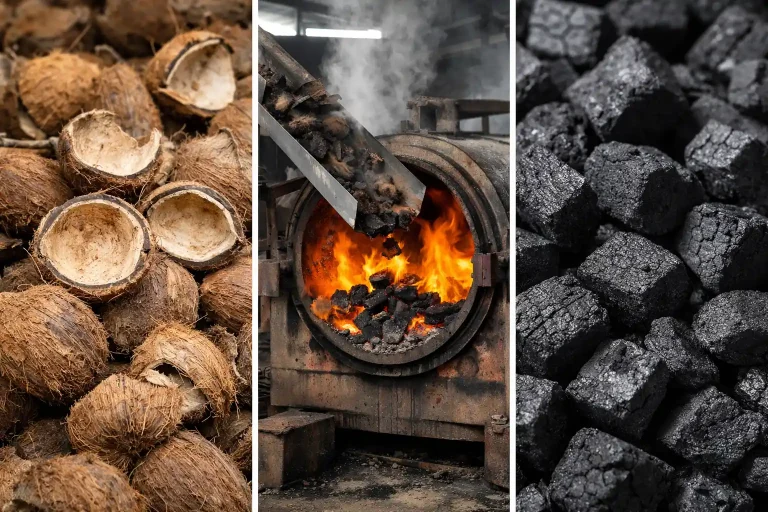
Coconut charcoal is produced from coconut shells, a natural agricultural byproduct. Unlike traditional wood charcoal, it does not require cutting trees, making it a more sustainable energy source. Coconut charcoal burns longer, produces less smoke, and generates consistent heat, making it ideal for shisha, barbecue fuel, industrial heating, and activated carbon production.
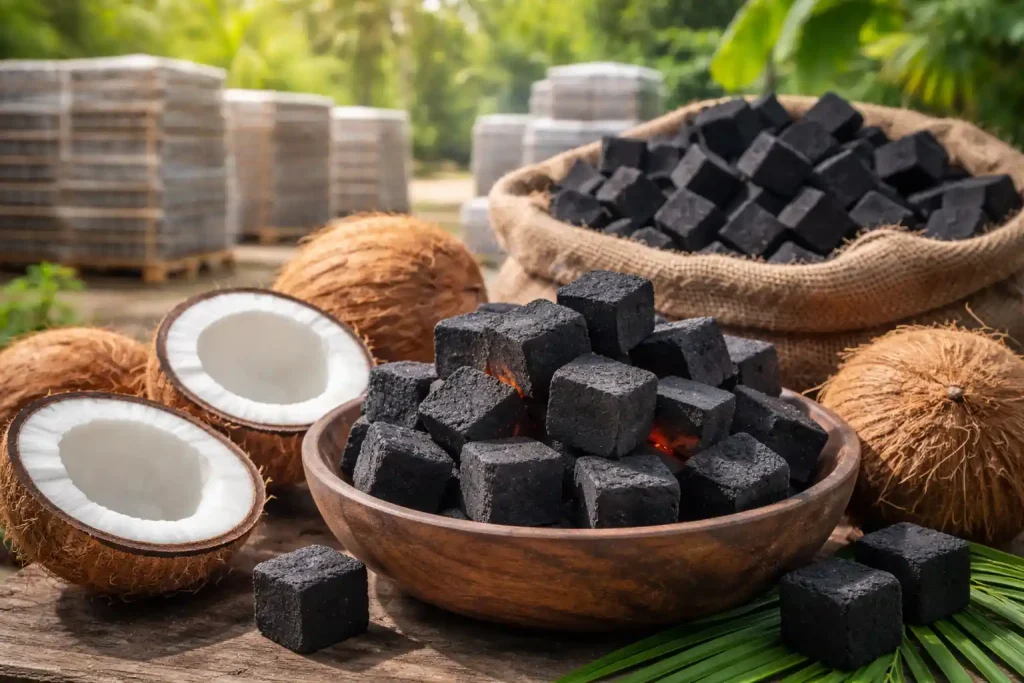
One of the fastest-growing product segments is Shisha charcoal cubes, which are widely preferred in the global hookah market due to their stable heat output and clean-burning characteristics. Because of these advantages, businesses worldwide are searching for dependable partners capable of supplying large quantities consistently. A professional high volume coconut charcoal supplier ensures steady production capacity while maintaining product quality standards.
Key Characteristics of a Reliable Supplier
When selecting a supplier, buyers should evaluate several critical factors:
1. Production Capacity
A true high-volume supplier must have scalable manufacturing facilities capable of fulfilling bulk orders without delays. Consistency is especially important for importers and wholesalers who rely on stable supply chains.
2. Quality Control Standards
High-quality coconut charcoal should have low ash content, long burning time, minimal odor, and uniform shape. A reputable high volume coconut charcoal supplier implements strict quality inspections throughout production.
3. Sustainable Sourcing
Ethical sourcing is increasingly important in international trade. Suppliers that utilize coconut waste materials help reduce environmental impact while supporting local farming communities.
4. Export Experience
Global logistics can be complex. Suppliers with export certifications, proper packaging methods, and experience handling international shipping reduce risks for buyers. Many international buyers research trusted exporters through professional websites such as indobriquettescharcoal.com to evaluate credibility and production capabilities.
Benefits of Partnering with a High Volume Supplier
Working with a large-scale supplier offers several advantages:
- Cost Efficiency: Bulk production lowers manufacturing costs, allowing competitive pricing.
- Supply Stability: Continuous availability prevents stock shortages.
- Customization Options: Many suppliers offer private labeling, packaging customization, and product specifications tailored to market needs.
- Long-Term Partnerships: Reliable suppliers help businesses scale operations confidently.
For companies expanding into energy products or eco-friendly consumer goods, choosing the right high volume coconut charcoal supplier can directly impact profitability and brand reputation.
Applications Across Industries
Coconut charcoal is no longer limited to household use. Today, it serves multiple industries:
- Hookah and shisha markets
- Barbecue and grilling products
- Water and air purification systems
- Activated carbon manufacturing
- Industrial fuel solutions
As these industries expand globally, demand for bulk charcoal shipments continues to rise, increasing the importance of dependable supply partners.
Final Thoughts
The transition toward sustainable materials has positioned coconut charcoal as a leading alternative energy product. Businesses seeking long-term growth should prioritize working with a trusted high volume coconut charcoal supplier that combines production capacity, consistent quality, and environmentally responsible practices.
By selecting the right supplier, companies can secure stable inventory, meet growing market demand, and contribute to a greener global economy while maintaining a competitive advantage in an increasingly sustainability-focused marketplace.